


The Season of Scammers: Protecting Your Author Platform, Inbox, and Peace of Mind

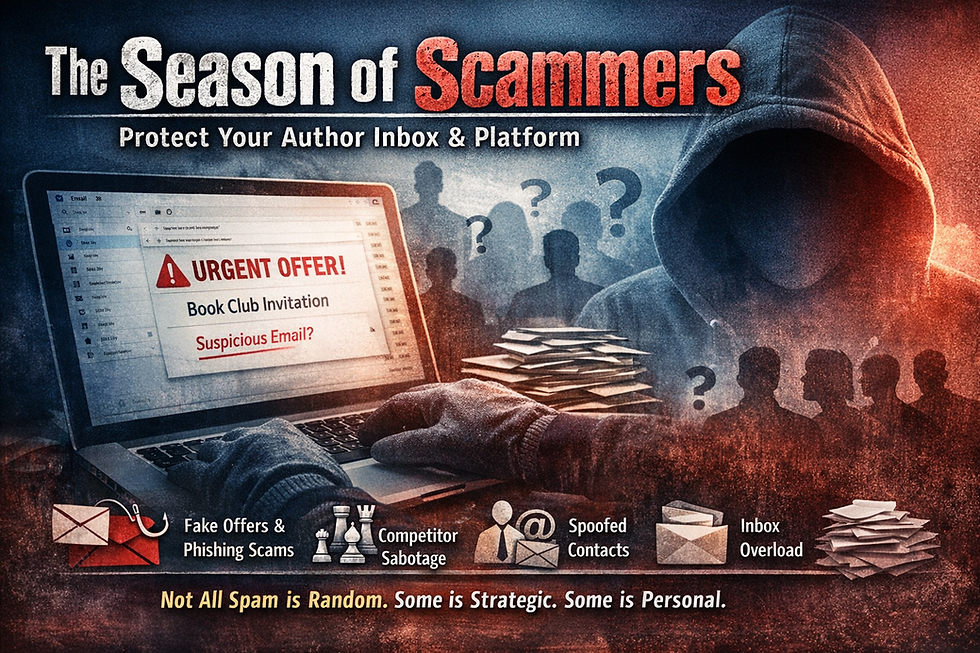
Every year — especially during high‑visibility seasons for authors, publishers, and public figures — inboxes begin to fill with a familiar wave of “opportunities,” “book club invitations,” “speaking requests,” and “urgent offers.” Some are legitimate. Many are not. And a surprising number come from people far closer than we’d like to imagine.
Why This Happens: The Reality Behind the Spam Surge
Scammers target authors and publishers because:
The literary community is public-facing and accessible. Your email is often listed on websites, social media, or event pages.
Authors are perceived as eager for exposure. Scammers exploit the desire for book clubs, interviews, and media attention.
Creative professionals juggle multiple platforms. This makes them easier targets for phishing, impersonation, and inbox flooding.
But here’s the uncomfortable truth many avoid saying aloud:
Sometimes the “scammer” is someone you know.
Not always malicious — sometimes curious, sometimes competitive — but often watching how you respond so they can:
Study your communication style
Test your boundaries
Learn your operational processes
Gauge your availability or vulnerabilities
Create friction or confusion in your workflow
And yes — in competitive industries, some individuals intentionally create havoc to slow you down, overwhelm your inbox, or attempt to inject harmful links.
The Overlooked Statistic: How Much Spam Comes From Competitors or Known Associates
While most public reports categorize spam broadly, cybersecurity firms consistently note that a meaningful portion of targeted phishing, spoofing, and harassment emails originate from individuals with some prior connection to the recipient — including former colleagues, acquaintances, or industry competitors.
Current data shows:
15–20% of targeted phishing or spoofing attempts come from “familiar‑adjacent sources.”
Creative industries — including publishing — experience up to 3× higher rates of relationship‑based spoofing.
12% of professionals who experienced targeted inbox harassment later discovered the sender was someone they knew or someone connected to a competitor.
This validates what many authors already sense:
Not all spam is random. Some is strategic. Some is personal. And some is designed to test your responses, slow your workflow, or provoke a reaction.
How to Know if a Sender Is Legitimate
Before responding, check for:
A verifiable website or social media presence
A real book club name with searchable activity
A professional email domain (not random Gmail/Yahoo strings)
Clear, specific details about your work
No pressure tactics, no urgent links, no attachments
If they cannot answer basic questions like: “Which of my books have you read” or “What drew your club to my work” — it’s not legitimate.
Should You Open the Email
Use caution:
Do NOT open attachments from unknown senders.
Do NOT click links without verifying the source.
Do NOT respond if the message feels off, vague, or formulaic.
If you must preview the content:
Use a split‑screen or preview‑pane email application.
This allows you to see the body of the email without fully opening it, reducing risk.
Filtering, Blocking, and Eradicating the Issue
Here are practical steps to protect your inbox:
1. Create Filters
Set rules such as:
Move unknown senders to a “Review Later” folder
Auto‑flag messages with suspicious keywords
Route all attachments from new contacts to quarantine
2. Block Aggressive Senders
If the email is clearly spam, phishing, or harassment:
Block the address
Report as spam
Delete without opening
3. Search the Sender
A quick search can reveal:
Scam reports
Fake book clubs
Impersonation attempts
Competitors using burner accounts
4. Use a Secondary Public Email
Keep your primary inbox private. Use a public‑facing email for inquiries, submissions, and events.
5. Never Respond to Suspicious Messages
Engagement confirms your email is active — which increases spam.
6. Strengthen Your Digital Boundaries
Update passwords
Enable two‑factor authentication
Avoid posting your direct email publicly
A Final Word
Authors, publishers, and creatives deserve safe digital spaces. You deserve inboxes that support your work — not sabotage it.
Recognizing the patterns, understanding the motives, and implementing protective measures ensures you stay focused on what matters: your craft, your community, and your creative peace.
_________
#DonnaInkPublications, #dpInkLtdLiabilityCompany, #2ndSpiritPress, #LittleBuggyProductions, #Owlhouse, #NocturnumsMuse, #ThunderforgePubs, #CreationsByQForYou, #AGrandmereProduction, #IronmantlePress, #LaughingcleaverPress, #KatsujinkenPublications, #BeatDeepBooks, #MoondustMedia, #PasharSagePress, #ZenConArts, #FacesOfRapMothers, #PrinceGeorgesCountyWriters, #PGCountyMWA, #MarylandWritersAssociation, #AuthorPlatform, #IndiePublishing, #PublishingImprints, #LiteraryHeritage, #CreativeEntrepreneur, #GhostwriterLife, #NarrativeStrategy, #BookMarketing, #WriterCommunity, #AuthorSupport, #PublishingHouse, #DigitalTrust, #InboxProtection, #ScammerSeason, #SpoofingAwareness, #CyberAwareness, #AuthorSafety, #WritingTips, #PublishingInsights, #CreativeResilience, #BookIndustry, #MediaMoguls, #CulturalStorytelling, #UrbanLit, #PopCultureNarratives, #TVAndFilm, #DocuFiction, #EntertainmentHistory, #DigitalBoundaries, #NarrativeArchitecture, #ExecutivePublishing, #WomenInMedia, #CulturalPreservation, #WritingCommunity, #AuthorEducation, #ContentStrategy, #BrandVisibility, #SEOForAuthors


Comments